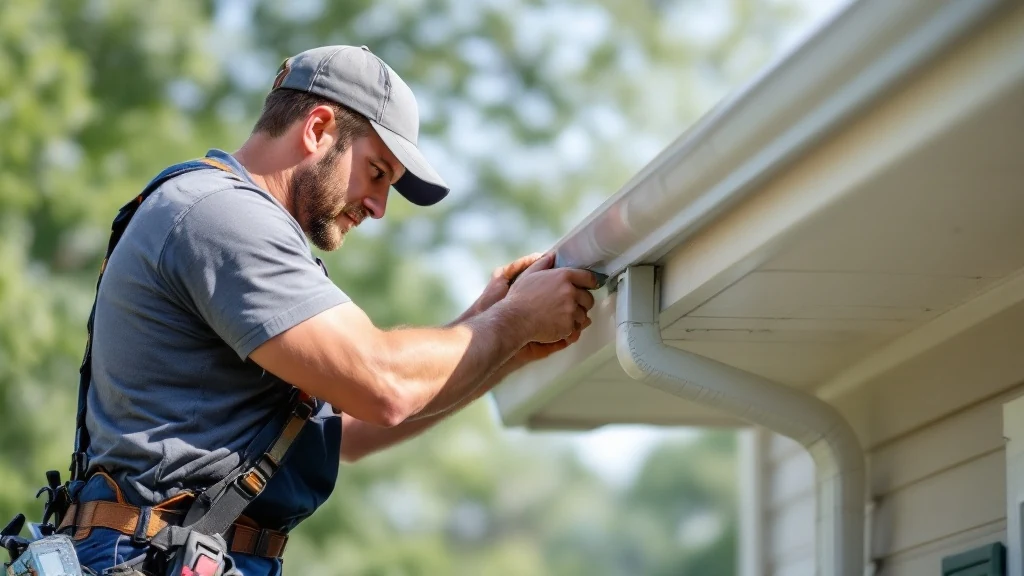
You're standing in the driveway after a Baton Rouge downpour and you spot it. One stretch of gutter is drooping in the middle, or a whole run has tilted out from the roof with a thin line of daylight behind it.
That gap is where the trouble starts. Water is now sliding behind the gutter instead of running through it. Here is why it happens, and how to tell whether yours is a quick fix or the start of an expensive one.
Short version
- Gutters pull away when their fasteners lose their grip. Usually that's because they were nailed into thin fascia board instead of the rafters behind it.
- Our weather speeds it up. We get more than 60 inches of rain a year, pine straw and oak catkins pile up in the troughs, and the humidity swells and shrinks the wood all season.
- If you can see daylight behind the gutter, or water sheets over the front during a storm, get it realigned soon. Put it off and a small repair turns into rotted fascia and foundation problems.
Is it cosmetic, or is it damage?
Not every crooked gutter is an emergency. Stand back on the lawn and sight down the roofline. Then wait for the next rain, which in Baton Rouge won't be long, and watch what the water does. Four things tell you how serious it is:
- Daylight behind the gutter. A visible gap between the gutter and the fascia means the fasteners have already given out.
- Water pouring over the front edge in an ordinary rain instead of draining to the downspout.
- A dip in the line. A sag in the middle of a run is water pooling where it should be moving.
- A puddle against the foundation that isn't coming from a downspout.
One of these and you can keep an eye on it. Two or more, and water is already going somewhere it shouldn't.
Five reasons it happens here
Gutters rarely come loose for one reason. It's usually a few of them at once, and our climate pushes on every one. Here's what's going on behind that gap:
| What's going on | Tell | What it takes to fix |
|---|---|---|
| Nailed to the fascia, not the rafters | The whole run leans out evenly, top to bottom | Re-hang with hidden hangers or long screws that reach the rafter tails |
| Debris weight from pine straw, oak catkins, and wet leaves | A sag in the middle, worst under tree cover | Clear it out first, then re-hang; guards slow how fast it fills again |
| Thermal expansion as the aluminum grows and shrinks | Fasteners backing out, end joints creeping apart | Slip or expansion joints, plus correct hanger spacing |
| Rotten fascia behind the gutter | The wood feels soft; a screw won't bite and hold | Replace or sister the fascia, then reattach the gutter |
| Never pitched right at install | Standing water even in a clean, level gutter | Reset the slope; sometimes add a second downspout |
The first row is the big one. Most gutters around here were hung with nails or screws driven straight into the fascia, which is a half-inch pine board that swells in July humidity and shrinks on a dry January afternoon. All that movement works the fastener loose, and then one storm is enough for it to let go.
A screw anchored in a rafter holds hundreds of pounds. That same screw in half-inch pine fascia holds about twenty before it starts backing out.
Debris weight finishes the job. A ten-foot section packed with wet pine straw can top 40 pounds, and no face nail holds that for long. And if a gutter is clean but still won't drain, that one was pitched wrong from the start. It needs its slope reset, not just a few tighter screws.
How bad is it? A 30-second read
Match what you're seeing to one of these three:
Watch it
A slight lean, no daylight behind it yet, and water still reaching the downspout. Add it to your next cleaning and check it again after big storms.
Call soon
A clear dip, water spilling over in heavy rain, or a gap wide enough to slip a finger behind. The fascia is still solid, so fixing it now costs the least it ever will.
Call now
Daylight behind the gutter, a section hanging loose, soft fascia, or a puddle working at the foundation. Every storm from here makes it worse and the repair bigger.
Why the hurry on that last one? Because in Baton Rouge the damage doesn't stay put. Water over the edge rots the fascia and soffit, that rot draws termites, and the runoff pools against clay soil that swells, shrinks, and cracks slabs. A small re-hang you ignore this spring can grow into carpentry work, a roof-edge repair, and a foundation bill by next year.
What fixes it, and what's a waste of money
For most gutters that have pulled away, the fix is realignment. The crew clears out the trough, pulls the gutter back tight, re-hangs it into the rafters with hidden hangers, resets the slope to about a quarter inch of drop for every ten feet, and reseals the seams. That handles the large majority of sagging gutters, and it costs far less than a full replacement.
Realignment stops being worth it when the metal itself is finished: rusted through, seams splitting open, or past twenty years old. Put a good hanger on a gutter like that and it'll be pulling away again within a season. That's when replacement is the right call, and we will tell you so instead of selling you a patch that won't hold. One more thing we should flag: if the fascia is already soft, plan for a little carpentry too, because no fastener grips rotten wood.
Can you do it yourself?
Some of it, yes. Clearing the gutter and snugging up an obvious loose hanger is a fair weekend job. Re-hanging a whole run is another story. You're setting a slope you can barely see by eye, trying to hit rafter tails hidden behind the fascia, and doing it from a ladder on ground that's still soft from the last rain. Get the pitch backwards and the drainage gets worse instead of better. On a two-story run, or anywhere the wood feels spongy, this stops being a weekend project. It's a serious fall risk, and the bill if it goes wrong beats the price of having it done right the first time.
Frequently Asked Questions
How do I know if my gutters need realignment?
Look for a dip in the gutter line when you stand back and sight along the roof edge. During a rain, watch for water spilling over the front of the gutter instead of flowing to the downspout. Also check for puddles next to the foundation after a storm. If the gutter is pulling away from the fascia and you can see daylight behind it, it needs realignment.
Can I realign my gutters myself?
You can try, but it's risky. You need a sturdy ladder, the right fasteners, and the skill to set the slope correctly. Most homeowners don't have a long enough level or a string line for the job. Getting the pitch wrong makes the problem worse. And working on a ladder in Baton Rouge heat or after a rain is dangerous. A slip can break a bone.
How long does gutter realignment take?
For a typical 1,500 square foot ranch house with one story and simple roof lines, realignment takes two to four hours. A two story house with multiple valleys and long gutter runs can take a full day. The crew has to move ladders, clean the gutters first, and work carefully around roof pitch and obstacles.
Will realignment fix all my gutter problems?
It fixes sagging and poor slope. But if your gutters are rusted through, have large holes, or are over 20 years old, realignment is a band aid. Those gutters need replacement. We will tell you whether realignment is worth it or whether you are better off replacing.
Does realignment include gutter cleaning?
Yes, the crew has to clean the gutters before they can realign them. You shouldn't pay extra for that cleaning. It's part of the job. If a contractor quotes you for realignment and then adds a separate cleaning fee, ask why. The cleaning is necessary to do the work properly.
How often should I have my gutters realigned?
Most homes need realignment every 5 to 10 years, depending on the original installation quality and how much debris hits the roof. In Baton Rouge, with heavy rain and lots of trees, you might need it more often. If you notice sagging after a big storm, don't wait for the next scheduled cleaning. Call for a checkup.
What happens if I ignore sagging gutters?
The sag gets worse. Water spills over and rots the fascia, soffit, and roof decking. That rot invites termites. The water also soaks the ground next to the foundation, which can cause cracks in the slab. Over a few years, a simple realignment turns into a fascia replacement, a roof repair, and a foundation fix. That costs a lot more.
Will realignment damage my roof or siding?
No, if it's done right. The crew works from ladders and never walks on the roof unless absolutely necessary. They use padded tools to avoid scratching the gutter or siding. A careful crew protects the house. If you're worried, ask the contractor about their process for protecting the roof and siding before they start.
Do I need to be home during the realignment?
No. We work outside. We need access to a water spigot for flushing the downspouts and an outdoor outlet for power tools. If you can leave the gate unlocked and tell them where the spigot is, they can do the job without you there. Most crews will call when they're done and show you photos of the work.
How much does gutter realignment cost in Baton Rouge?
Costs vary based on the size of the house, the number of stories, and how much debris is in the gutters. A typical range for a single story home is on the lower end, while a two story home or a house with steep roof pitches runs higher. The only way to get an exact figure is a free on site quote. Most Baton Rouge contractors will give you one over the phone with photos or in person.
Related gutter cleaning services in Baton Rouge
Need gutter cleaning in Baton Rouge? Get a free estimate today.
📞 225-529-1427