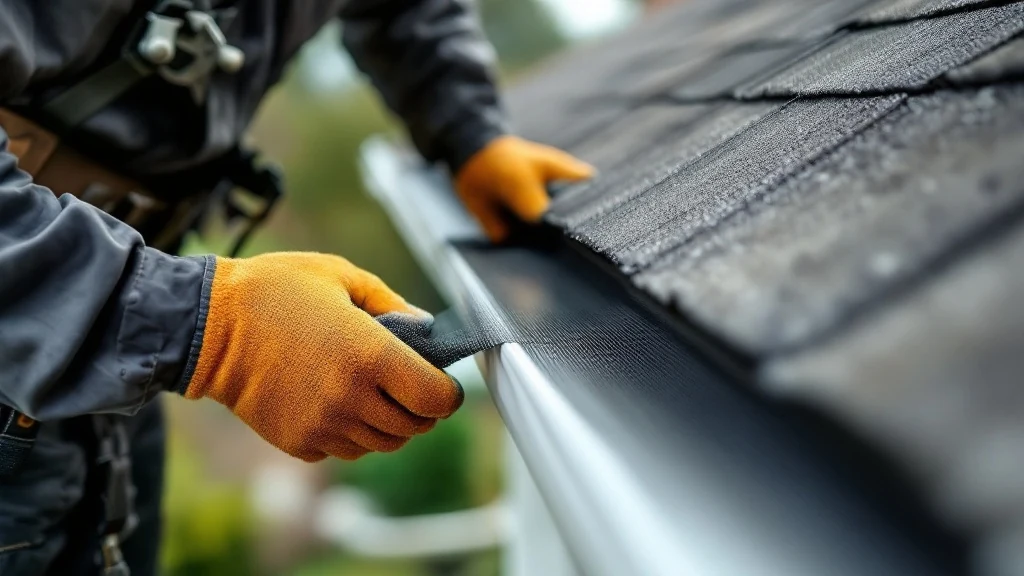
For Baton Rouge homes, stainless micro-mesh on a rigid frame is the type that holds up best. Our combination of pine needles, spring catkins, heat, and heavy rain defeats the cheaper designs in a way it would not in a drier city with different trees.
That is the recommendation. The reasoning behind it matters more, because it tells you what to check on any quote you get, including ones for products nobody has heard of.
Five types, side by side
| Type | Typical cost | How it does under our trees | Verdict |
|---|---|---|---|
| Snap-in plastic screens | Lowest, sold by the ten-foot section | Large openings pass pine needles straight through. UV and heat make the plastic brittle, and wind or a ladder pops them out of the trough. | Avoid. The cheapest version of the wrong idea. |
| Perforated metal screens | Low | Sturdier than plastic and fine under broadleaf trees. Pine straw still threads through the holes and mats underneath where you cannot reach it. | Only if you have no pines and no oaks. |
| Foam inserts | Low | Fills the trough and holds moisture against the metal. Seeds sprout in it and the foam breaks down in Louisiana summers. | Avoid here. The humidity is the problem. |
| Brush inserts | Low to moderate | Catches debris in the bristles instead of shedding it, so it fills up and has to be pulled out and cleaned, which is worse than cleaning a bare gutter. | Avoid. |
| Reverse-curve | High, professionally installed | Uses surface tension to wrap water into a slot. Works, but heavy downpours can overshoot the slot and debris collects in it. | Workable, but with reservations given how hard it rains here. |
| Stainless micro-mesh | Highest, professionally installed | Openings finer than a pine needle is thick, so straw and catkins ride on top and wash or blow off. Stainless holds up to heat and humidity. | The best fit for this area, if the install is done right. |
Installed guards average roughly $43 to $47 per linear foot in a 2026 survey of a thousand owners, with micro-mesh material alone running about $8 to $25 per foot (This Old House (2026 survey)). The spread between the material and the installed price tells you how much of this purchase is labor and craft rather than product.
Why does pine straw decide this?
Almost every guard comparison written for a national audience assumes the enemy is a maple leaf. A leaf is broad and flat, and nearly any cover stops it. A pine needle is the opposite: long, thin, stiff, and perfectly shaped to find any opening wider than it is thick.
Once a needle is through, it does not wash out. Needles knit together into a felt in the bottom of the trough, and under a fastened guard nobody sees that happen for years. That single behavior is why screens fail here and micro-mesh does not, and it is why the first question to ask about any product is how big the openings are. Water oak catkins in spring behave the same way (weather-and-climate.com (1990-2020)).
Ask the opening size, not the brand name. Everything else on a guard quote is packaging.
Pick by your situation
- Pines or water oaks over the roof: micro-mesh, and nothing with visible holes. This is the case where the upgrade is worth paying for.
- Broadleaf trees only, single story: a quality perforated metal screen can be enough, and it costs a fraction of mesh.
- Two stories, any tree cover: micro-mesh. You are buying fewer ladder trips as much as you are buying clean gutters.
- Metal roof: micro-mesh with a frame that does not require sliding under a panel. Ask specifically how it attaches.
- Older gutters: fix the hangers and the fall first. Guards on a sagging run lock in the problem.
- Selling within a couple of years: a cleaning schedule makes more sense than a guard investment you will not be around to collect on.
What to check on any quote
- Opening size and mesh material. Stainless, not aluminum mesh or plastic. Fine enough that a pine needle cannot pass. If a sales rep cannot answer this, that is the answer.
- How it attaches to the roof. Anything that slides under the shingle course can lift the roofing and complicate a roof warranty. Ask for the attachment method in writing.
- Whether the trough is cleared and re-pitched first. Gutters run on a deliberate fall of about a quarter inch per ten feet (National Gutter Authority (NAHB guideline)). Fixing that is part of the job, not an upsell after the fact.
- What the warranty covers and who honors it. A lifetime clog-free warranty is worth whatever the outfit backing it is worth in five years. Ask whether it covers labor or only the panels, and whether it transfers if you sell.
- How you clean it later. Every guard needs its surface washed off eventually. Find out whether that means a hose from the ground or pulling every panel.
A word on the total picture
Baton Rouge averages more than sixty inches of rain a year, roughly double the national figure (NOAA / U.S. Climate Data). That volume is why a guard here has to pass water aggressively, not just block debris, and it is why the fine-mesh products that work beautifully in a dry climate can sheet water off the front in one of our July downpours if they are installed at the wrong angle.
Which brings it back to installation. On this purchase, the crew matters as much as the product. A top-tier mesh hung at the wrong pitch performs worse than a mid-tier screen hung correctly.
If you want a second opinion on a quote, call us. We clean guarded gutters all over this city, so we see which products are still working after five summers and which ones are not.
Sources
Related gutter services in Baton Rouge
Frequently Asked Questions
Is micro-mesh worth the extra cost over a screen?
Under pine or water oak, yes, because a screen does not solve the problem you are buying it to solve. Needles pass through and mat underneath. If your roof only sees broadleaf debris and the house is single-story, a quality metal screen can be enough.
Can I install gutter guards myself?
Snap-in screens, yes, though they are the type least worth installing. Micro-mesh systems are sold mostly through installers, and the install is where the performance comes from: the pitch, the attachment, and clearing the trough first. It is also repeated ladder time at every foot of your roofline.
Do gutter guards work in heavy rain?
Good ones do, but this is where cheap products fail most visibly. In a hard Louisiana downpour a poorly angled mesh can shed water off the front instead of passing it. Ask any installer how their product handles peak flow, and be skeptical of anything that ponds on the surface.
Will guards stop birds and squirrels nesting in the gutters?
A rigid, well-fastened guard makes the trough much less inviting, since there is no open channel to build in. Loose screens and foam are worse, because animals move them or nest in them. No guard keeps wildlife off the roof itself.
Need gutter cleaning in Baton Rouge? Get a free estimate today.
📞 225-529-1427